With translation out of the way, I moved on to something more complicated. Rotation.
The last time I went about it, I tried it with quaternions. It was time consuming and I'm not entirely sure how it even ended up working. Euler angles are even worse. Vectors and matrices, however, seem more suited to solve the problem and play nice with OpenGL. And since the GLTools library I'm using already handles that, I really only need to wrap a few calls in my entities to get it working.
As I mentioned in my previous post, I have a reference frame determined by three vectors and a position. This makes local rotations simple. If I want to roll along the length of the model, I rotate around the forward vector. If I want to change the pitch of the model, I rotate around the right vector. And if I want to turn to either side, I rotate around the up vector.
I do the same basic set up as I did for translation, except my keys now affect rotation. I tie each pair of keys to a fixed rotation around each of my local axis, so that as long as I hold a key the model rotates and on release it stops rotating.
This gets the model turning about, and to spice things up I decide to give it the ability to accelerate. I first create a velocity vector, initially set to 0 so the body is at rest. Then, when I accelerate, I add to the vector a speed increment in the forward direction. When it comes time to update my entity's position, I add the velocity vector to it's position and done. This models newtonian movement well enough; velocity is constant unless I accelerate in a given direction. If I want to stop, I have to accelerate in the opposite direction to my movement.
I can rotate around independently of my direction of movement because I store the velocity vector in global coordinates. I could easily work out the vector in local coordinates as well, and it would provide a vector that moves around as I rotate the ship.
The result is
Framework-0.0.2r.
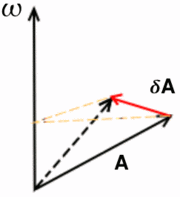
What is missing, however, is that rotation should also be continuous unless I stop it. I'm modeling conservation of momentum, but not of angular momentum. I would need to store another vector, much like the velocity vector, which is affected by what kind of rotation I attempt. Unfortunately I'm not 100% sure on the physics involved here. Ideally I could just add vectors, same as with speed. The angle of rotation would be determined by the magnitude of the vector, while the axis of rotation would be the direction of the vector. That feels about right, and I should have it set up for Framework-0.0.4r.
Next up, I reworked my sphere building algorithms from the very beginnings of this blog. I used to use triangle strips, but together with the fixed pipeline that's obsolete. Vertex lists and indices is where it's at now.